Specialized Onsite Wastewater System for Small-Scale Slaughterhouse
1/17/2026
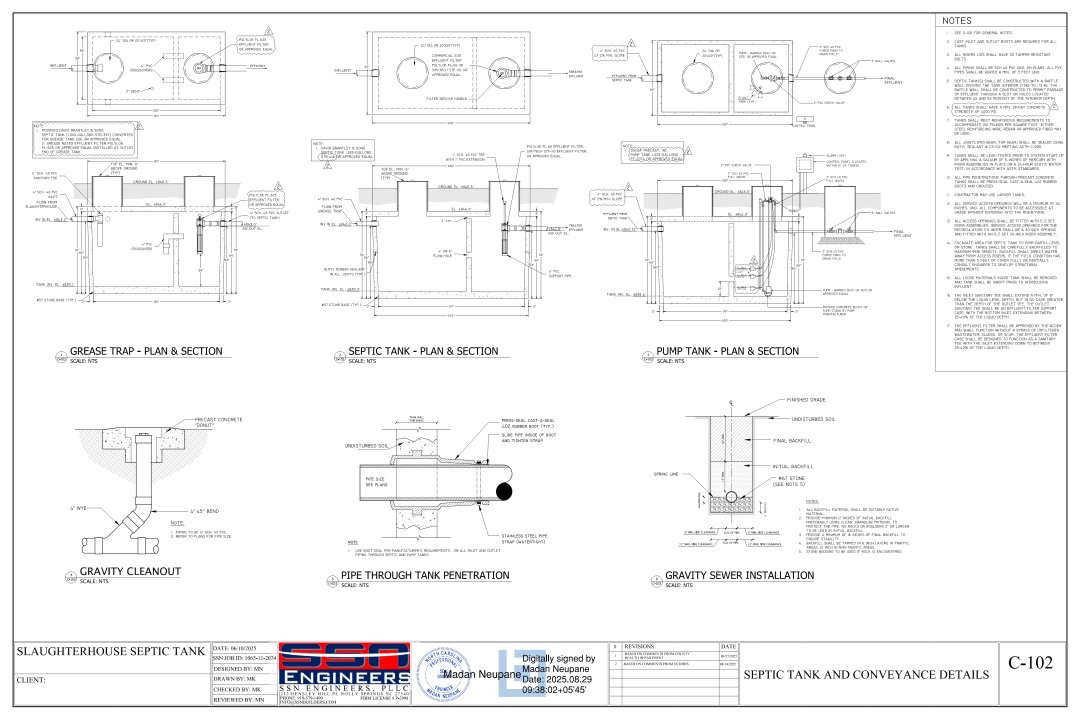
SSN Engineers has recently completed the design and permitting of a specialized onsite wastewater treatment system for a small-scale slaughterhouse in Greensboro, North Carolina, demonstrating the firm’s growing capability in industrial and high-strength wastewater solutions. The project was delivered under North Carolina’s Engineered Option Permit (EOP) framework, which allows for flexible, site-specific wastewater system designs when conventional septic options are not feasible. This permitting pathway supports innovative treatment approaches while ensuring full regulatory compliance and environmental protection.
Onsite wastewater systems for small-scale slaughterhouses require advanced engineering due to the unique characteristics of meat-processing effluent, which can include blood, fats, oils, and high organic loads. Unlike conventional residential septic systems, these facilities generate high-strength wastewater that can overwhelm standard treatment units if not properly managed. Effective system design is therefore essential to protect groundwater, public health, and nearby surface waters while supporting the long-term operation of the facility.
In North Carolina, the design of these systems must consider site-specific conditions such as soil type, seasonal high-water table, available land area, and hydraulic loading rates. Engineers must also evaluate effluent characteristics, and pretreatment needs to protect the soil treatment area. Projects typically require compliance with multiple regulatory standards, including 15A NCAC 18A .1900–.1952 for system design and siting, 15A NCAC 18A .1938 for industrial pretreatment, and 15A NCAC 02T effluent quality standards. Permitting involves coordination with both local and state agencies, along with the development of monitoring and operation plans.
Improperly designed or operated slaughterhouse wastewater systems can result in environmental contamination, system failure, and regulatory enforcement. Common issues include underestimating wastewater strength, failing to address seasonal groundwater fluctuations, or allowing high-strength wastes such as blood and solids to enter the treatment system. These risks underscore the importance of professional engineering design and regulatory oversight for food-processing facilities.
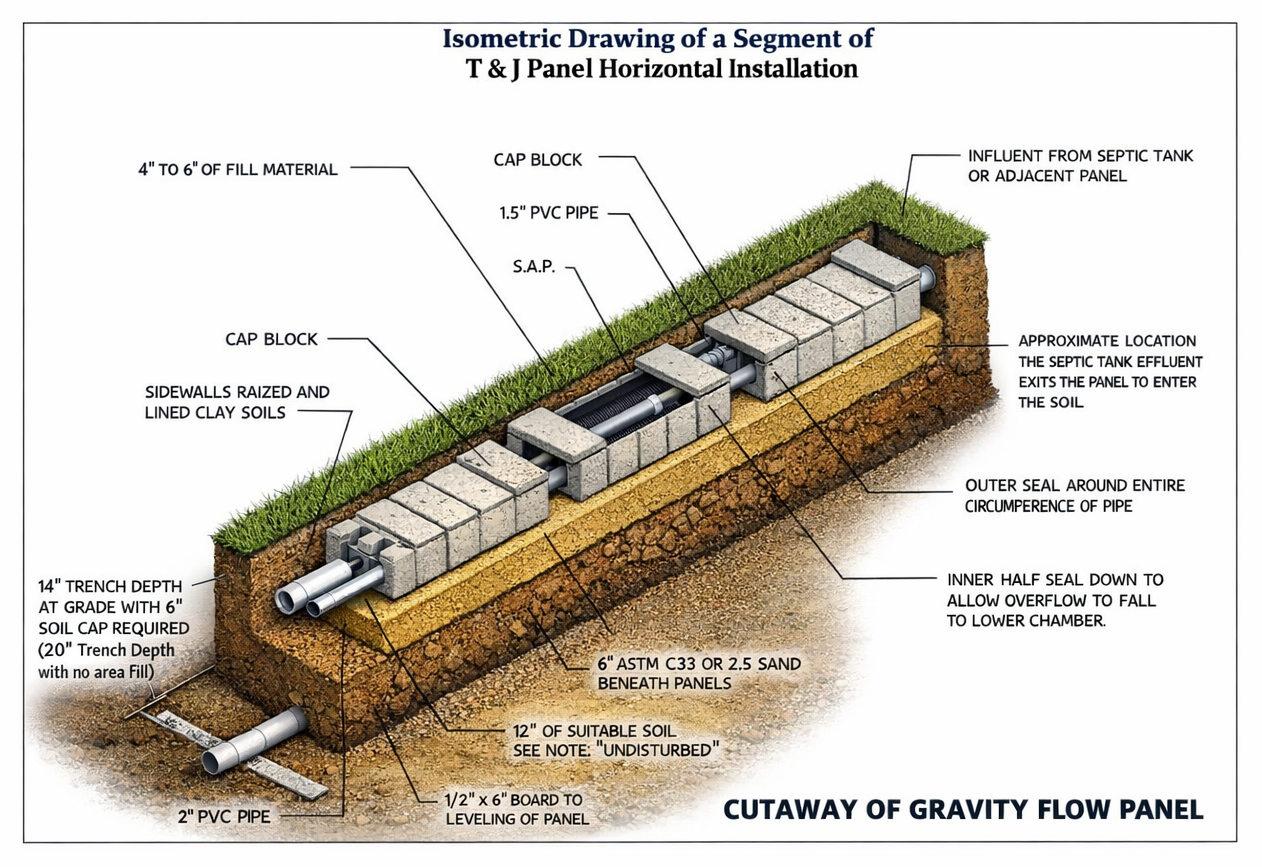
The Greensboro project designed by SSN Engineers accommodates a flow of approximately 300 gallons per day and incorporates advanced pretreatment to protect the disposal field. The system uses a Prefabricated Permeable Block Panel System (PPBPS), significantly reducing the drain field footprint compared to conventional layouts. Operational wastes such as blood and by-products are managed separately through licensed haulers, further reducing system loading and supporting long-term performance.
Construction of specialized onsite wastewater systems represents a significant investment for small facilities. Costs typically vary based on site conditions, regulatory requirements, and treatment complexity, but commonly range between $60,000 and $140,000 for similar installations.
The successful completion of the Greensboro project highlights SSN Engineers’ technical expertise in designing and permitting complex onsite wastewater systems under the Engineered Option Permit (EOP) process. By combining innovative engineering, regulatory knowledge, and practical operational planning, the firm continues to support environmentally responsible development and provides small food-processing facilities with reliable, compliant wastewater solutions.